Medically reviewed by Dr Ivan Schewitz
November is Lung Cancer Awareness Month. It is a good time to talk about a disease most people would rather not think about. Lung cancer is the leading cause of cancer deaths in South Africa, and most people only find out they have it once it has already spread.
It doesn’t have to go that way. Lung cancer screening in South Africa is available now, and for people at higher risk, a yearly low-dose CT scan can find cancer long before any symptoms show up.
Why lung cancer is usually found late
Early lung cancer rarely causes symptoms. There is no cough, no pain and nothing that sends you to the doctor. By the time a cough that won’t go away, chest pain, weight loss or coughing up blood appears, the cancer is often advanced.
South Africa has an extra problem. Tuberculosis is very common here, and on a chest X-ray, TB and lung cancer can look alike. Some patients are treated for TB for months before anyone checks for cancer.
The result is sobering. Data from the largest hospital in the Western Cape showed that in 2019, 94% of patients with lung cancer already had advanced, incurable disease when they were diagnosed.
Now compare that with cancer found early. When lung cancer is picked up at the earliest stage, more than 9 out of 10 patients are still alive five years later. That gap is the whole reason screening exists.
What is a low-dose CT scan?
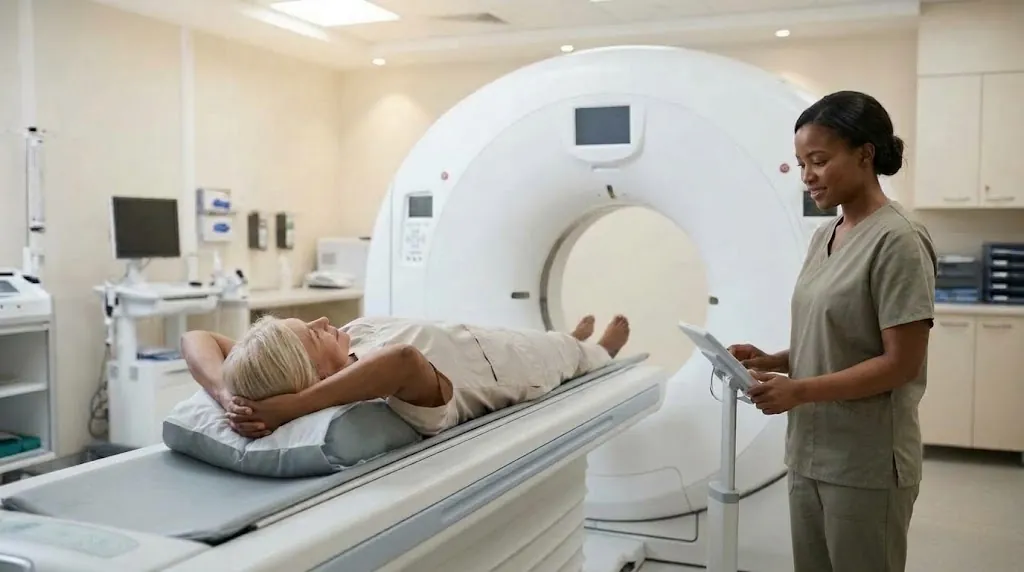
A low-dose CT (LDCT) scan is a quick, painless scan of your chest. You lie on a padded table that slides through the scanner, hold your breath for a few seconds and that’s it. There are no needles, no contrast dye and no special preparation.
The scan builds a detailed 3D picture of your lungs. It can show nodules just a few millimetres across, far smaller than anything a normal chest X-ray would pick up.
It also uses up to 90% less radiation than a standard CT scan. The dose is similar to the natural background radiation you are exposed to over a few months to a year of everyday life.
Why not just a chest X-ray? Large studies found that yearly chest X-rays did not reduce deaths from lung cancer. Low-dose CT did. In the US National Lung Screening Trial, people screened with LDCT were 20% less likely to die from lung cancer than those screened with X-rays.
Who should get lung cancer screening?
Screening is meant for people at higher risk. You may qualify if you:
- are between 50 and 80 years old
- have a smoking history of at least 20 pack-years
- still smoke, or stopped smoking within the last 15 years
What is a pack-year? It is a simple way to measure how much you have smoked. Multiply the packs you smoked per day by the number of years you smoked. One pack a day for 20 years is 20 pack-years. So is two packs a day for 10 years.
Other things can raise your risk too, and they are worth mentioning to your doctor:
- a parent, brother or sister who had lung cancer
- past exposure to asbestos or mining dust
- previous TB or other long-term lung disease such as COPD
You should also be in reasonable general health and willing to have follow-up tests if the scan finds something.
Not sure if you qualify? Our free pack-year test takes a couple of minutes.
What happens if the scan finds something?
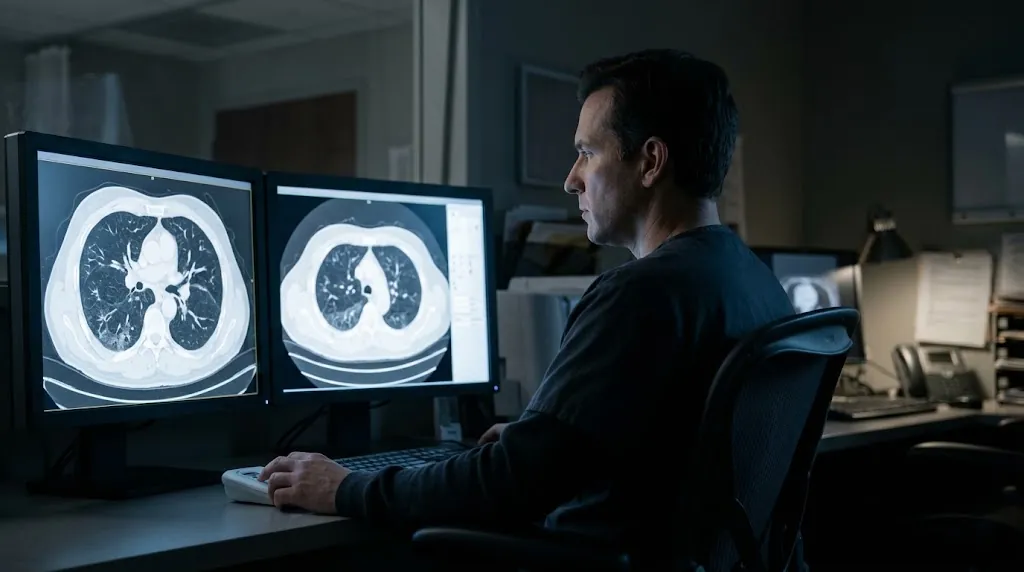
This is the part that worries most people, so let’s be clear. Most people who are screened get a normal result. And most small spots (nodules) found on a scan are not cancer. In South Africa, many are old scars from past TB or other infections.
That’s why we follow a careful, step-by-step approach based on the South African Thoracic Society recommendations:
- Nodules under 6 mm usually need nothing more than your next yearly scan.
- Nodules between 6 and 10 mm with no worrying features are checked again with another scan in six months.
- Larger nodules, or ones that grow or look suspicious, are investigated further with your doctor.
Every scan is read by thoracic radiologists who specialise in chest imaging, and a detailed report goes straight to your doctor.
What to expect on the day
The whole visit usually takes less than 30 minutes.
- Registration. Our team checks your details and history and explains what will happen.
- The scan. You lie on the scanner bed and hold your breath for about 5 to 10 seconds while the bed moves.
- The report. Our radiologists review the images and send the results to your doctor.
Wear comfortable clothes without metal zips or buttons. You can drive yourself home afterwards and carry on with your day.
Will my medical aid cover it?
Some medical schemes now cover lung cancer screening for members who meet the criteria. Cover differs between schemes and plans, so check with yours before your appointment, or ask our team to help.
Screening is not a free pass to keep smoking
A clear scan is good news, but it doesn’t undo the damage smoking causes. Stopping is still the single best thing you can do for your lungs, at any age. If you smoke, ask your doctor about support to quit. Many people need a few attempts before it sticks, and that’s normal.
Frequently asked questions about lung cancer screening
Once a year, for as long as you meet the criteria and are well enough for treatment if something is found.
No. You simply lie still and hold your breath for a few seconds. There are no injections.
Your risk drops after you quit, but it doesn’t disappear. Some international guidelines no longer use the 15-year cut-off, so speak to your doctor about your own risk.
Yes. Screening programmes focus on people with a smoking history because that is where the evidence is strongest. If you have a cough that lasts more than three weeks or any other worrying symptom, see your doctor whether you smoke or not.
You can book directly or ask your GP to refer you. Either way, your report goes to your doctor.
Take the first step this November

If you are 50 or older and have smoked, this is the month to find out where you stand. Take our free eligibility test, book a screening or call us on 010 026 6498. Want to know who reads your scan? Meet our doctors. Still have questions? Visit our FAQs.
This article is for general information and doesn’t replace advice from your own doctor.